
From Trophy to Tragedy: The Rituals of Stag Hunting in the UK
You will often hear the hunting community use words such as tradition, heritage and country way of life to romanticise stag hunting and invoke feelings of nostalgia. The reality is very different, with violent undertones and extreme animal cruelty.
Medieval Rituals, Modern Times

Hunting stags to the point of collapse with hounds has been a ritualistic process since medieval times. The stag’s suffering (so evident during a prolonged chase) was symbolically associated with the suffering of Christ, and stags were generally the subject of much myth and folklore.
Stag hunting has always “enjoyed” an association with royalty, and in the medieval age, hunting par force (as this method was called) was considered the noblest of all forms of hunting.
Par force hunting comprised eight clear stages. Modern stag hunting still replicates this general arc: a stag is singled out, separated, harried by relayed pairs of hounds and chased to exhaustion. Brought “to bay” by hounds, the hunted animal will then be shot. In years gone by, they would have been dispatched with a dagger. They are then butchered in the field.
Two Hounds, Relayed
At a modern stag hunt, hounds are set after the stag in relayed pairs. Fresh hounds will be shuttled around the countryside in a vehicle, so that they can be released as the active pair start to tire, keeping relentless pressure on the stag.
Interestingly, although hunts were forced to move to this method after the Hunting Act made pursuit with a full pack of hounds illegal, it actually marks a return to medieval tradition. In those days, relayed hounds were also used, with pairs of hounds placed along the predicted route of the chase ahed of the stag being separated and the pursuit starting.
Sadly, in modern stag hunting, fewer hounds gives the stag little advantage. Today, he is pursued and “turned” by a pack of baying supporters, on foot, quad or motorbike, who will mass at critical points (such as bridges, or the boundaries to sanctuary land) making noise to scare him back towards the hunt, or simply keep the bewildered, exhausted animal moving.
The Assembly
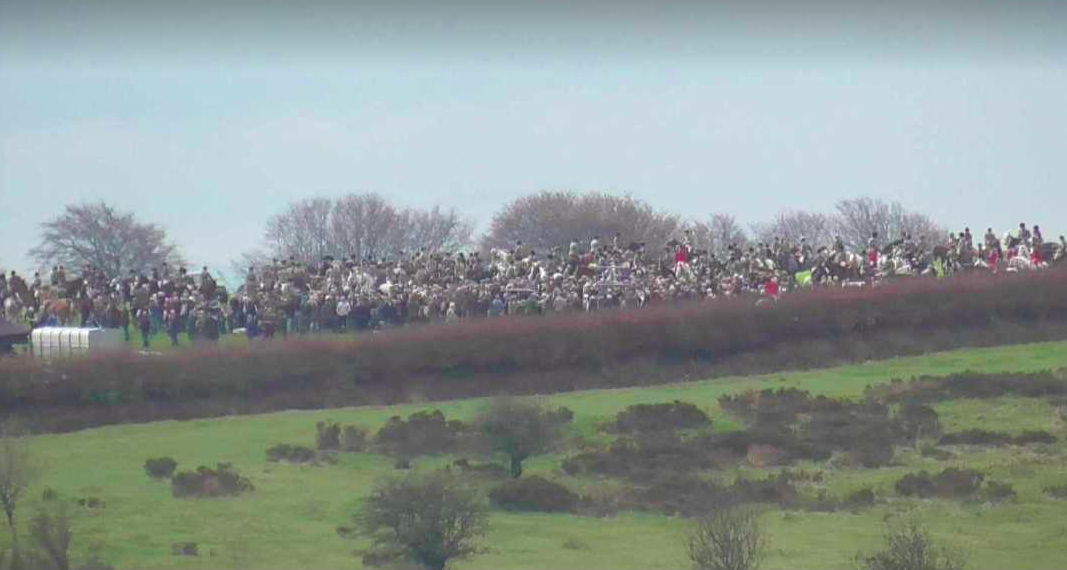
From the offset, stag hunting is steeped in medieval rituals, beginning with the assembly of the hunt. The field (mounted members of the hunt who will be riding that day) will be dressed in traditional attire, which may include hunting shirts, stocks, dark jackets and breeches. Hunt staff (masters and hunt servants) are denoted by their hunting pinks – the red jackets so commonly associated with hunting, and an important part of the “regalia” that helps present a sanitised public image, divorced from the horrors that await after the hunt rides off.
Before the hunt commences, the “stirrup cup” ceremony takes place, with a small glass of usually port or sherry being offered to participants. This is to toast the expected success of the day. The master will then lead the procession out for a day’s hunting. The hunt master holds responsibility for maintaining protocol and ensuring it is always adhered to.
A core aspect of this whole ritual is the chase or “pursuit” as they refer to it. Not only does it give the participants a thrill to chase an animal while they are aware of its impending fate, they are also expected to demonstrate their horsemanship skills and terrain knowledge.
Literally Lawless
It’s interesting to note that modern day stag hunting only seems to have retained only the traditions that suit it. One very ancient tradition – that of “law” – has been discarded. For once, this isn’t us having a dig at the legality of the hunt’s actions – law refers to a “head start” that the hunted animal used to be allowed.
To start the pursuit ahead of this short period of grace being observed was considered extremely unsporting. It should be noted that, when law was still implemented, its purpose was not to give the deer a greater chance of escaping, but rather to provide a longer chase. Today, law is no longer a tradition that we see practiced – suggesting that a kill is a higher priority (stag hunts will often hunt a second animal, if the first is killed earlier in the day.)
The Carve Up
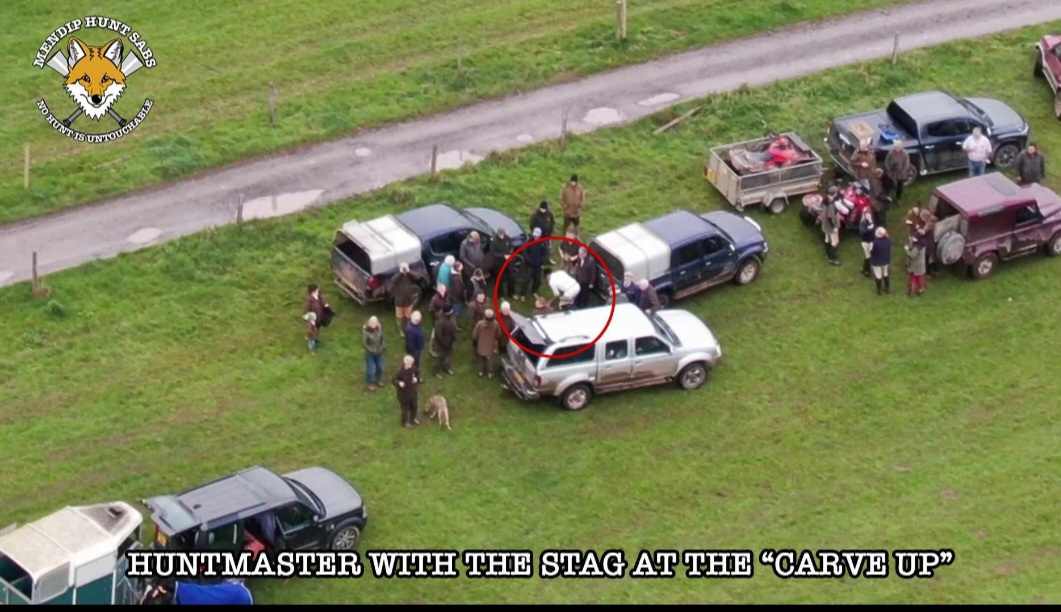
Once the stag is exhausted and can no longer continue to run, he will collapse. He is then shot, and the ritualistic carve up can begin. This may not always happen at the site of the kill. The body of the stag is usually pulled around and thrown onto a vehicle to move to another site.
The hunt may want you to believe that they treat the animal with the utmost respect, but the reality is very different. Hunts have been witnessed displaying extremely upsetting and disrespectful actions towards a stag’s body. Supporters idly kicking the stag’s face, grabbing his antlers, and pulling them around, forcing his head to move at unnatural angles. Laughing and joking while hounds are allowed to crawl over his lifeless body.
Given that the hunt will often claim to be conducting “research and observation” or taking out animals riddled with TB, the lack of biosecurity (and any kind of sampling or testing) at these carve ups is always telling.
There are certain expectations from a carve up. It is customary for the heart to be given to the owner of the land where the stag was killed. Meat from the carcass may be offered to owners of the land the stag ran across. They are rewarded for allowing the hunt to use their land, despite this being illegal under Section 3(1) of the 2004 Hunting Act.
The head and antlers are often given to the hunt master as a trophy for his success. Or it may also be given to esteemed guests, in appreciation of their attendance. Slots (the lower leg and hooves) and teeth are also removed from the animal’s body and given out as trophies. Other organs are then cut up and handed out to onlookers who may have played a role in the stag’s demise. Offal is used to reward the hounds.
Stuck In The Past, Ready To Be Left There
While killing stags (and hinds) has been achieved by spear, bow and bullet since time immemorial, stag hunting with hounds sits in a cruel class of its own – it is set apart from other forms of hunting and defined by its rituals. It’s not the most efficient way of killing a deer. It’s a pass time, a social and cultural event enjoyed by a barbaric section of society.
Stag hunts and their supporters are so immersed in their archaic practices that they cannot (or will not) see the cruelty they inflict on stags (or indeed hinds, who often have fawns or may even still be pregnant.) A large proportion of them are determined to protect and preserve their violent crimes, killing expectant mothers and majestic stags and carving them up for trophies.
Regardless of how stag hunts dress up their activities, the truth is they are hunting to quench a bloodlust – observing a ritualistic process that ends in celebration and the presentation of trophies.
The results of a survey conducted in 2019 by the charity Born Free, showed that more than 75% of British people oppose trophy hunting. However, most people are unaware that a brutal form of trophy hunting is happening right under our noses, in the South West of England. Cloaked in secrecy and drenched in blood, it’s more like a satanic ritual.