
What Happens at a Stag Hunt?

Despite the sanitised images of smart riders on horseback and friendly hounds being paraded at country fairs, the muddy, bloody reality of a stag hunt is far from the idyllic scene it is made out to be.
Behind the veneer of tradition lies a cruel and archaic practice that inflicts unnecessary suffering.
What are the main stages of a stag hunt?
The Meet
Today, opposition to stag hunting is so widespread that hunts no longer publish their meet cards. It’s almost like they have something to hide… At a secret time and location, horseboxes and supporter vehicles will start to mass. Stag hunts (in particular, Saturday meets) can attract huge numbers of riders, so they’re easy to recognise.
Money will be collected from riders and supporters (let’s hope they have a permit for those public collections…) and the hunt staff will brief the field of riders ahead of riding off.
If you see any large gatherings of this nature, as shown in the image below (credit to Devon County Hunt Saboteurs) – please inform the HSA hotline.

The Selection
In years gone by, experienced hounds known as tufters would be set on a pre-selected stag, which an individual called a harbourer could have been tracking for days. Today, a pair of hounds and mounted riders will be used to separate a stag from his herd and start him running. This process can be prolonged, and causes stress to the whole family unit, as they are pursued and scattered.
The practice of law – a “head start” given to the hunted stag is no longer observed – read more about this in our article From Trophy To Tragedy: The Rituals Of Stag Hunting.
The Chase Begins
Due to the nature of the landscape, hounds will predominantly start hunting by scent, only “coursing” by sight in the final stages of the chase. After being set on the line of the stag, the pursuit begins.
Stags are intelligent creatures, with an intimate knowledge of their immediate habitat. However, hounded and pursued by mounted riders and supporter vehicles, they are quickly driven out of familiar territory. With so many supporters communicating the stag’s position over radio, even the most experienced animal stands little chance of escape.
The Exhausting Pursuit
Stag hunts can last for hours, subjecting the animal to extreme physical and emotional distress. The stag’s body is pushed to its limits as he races through fields, forests and streams in a desperate bid to survive. Meanwhile, the hunt will swap out pairs of hounds as they tire, meaning the pressure is relentless.
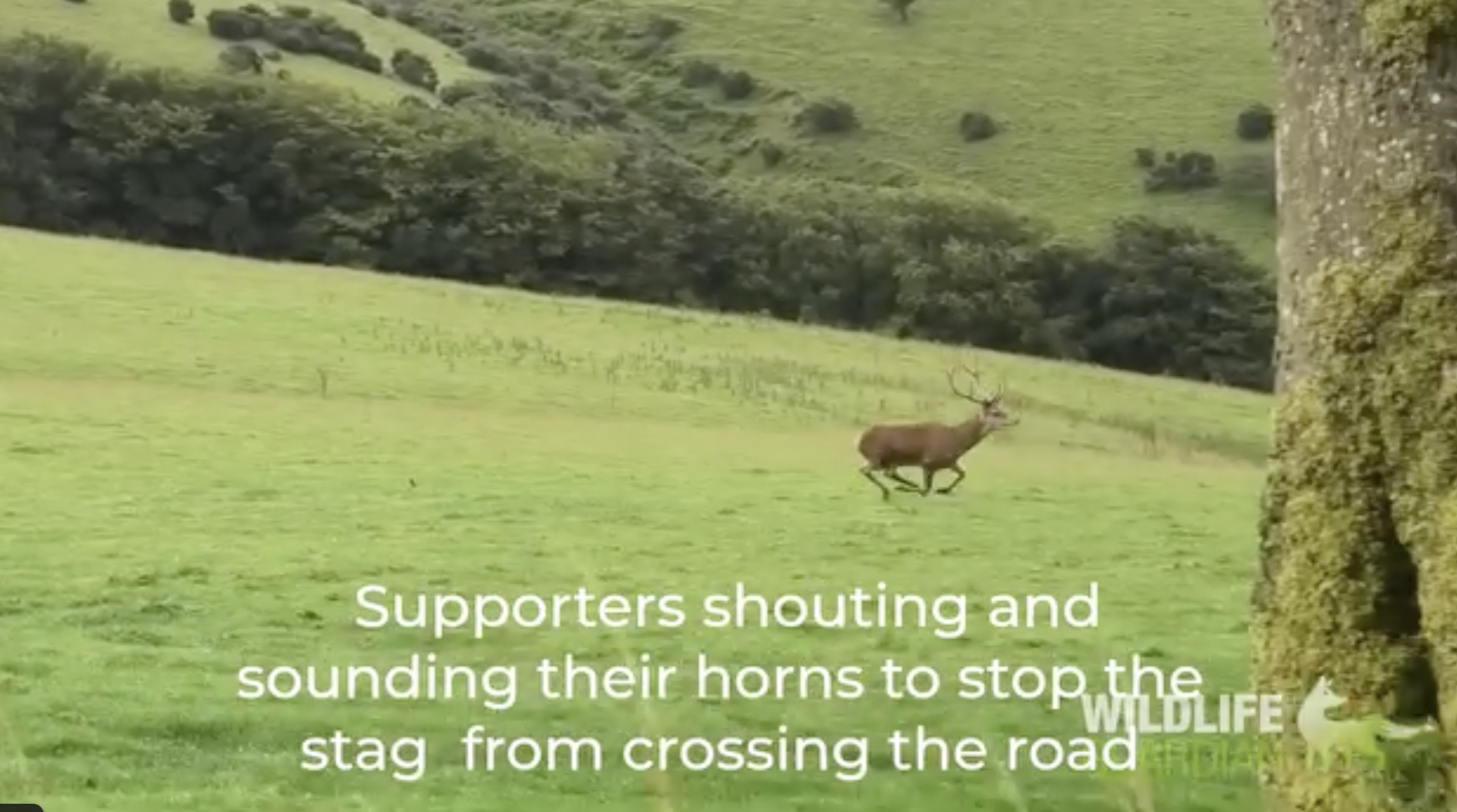
You’ll often see riders placed “on point” – standing at vantage points outside of woodland or valleys, waiting and watching to alert the huntsmen to the direction of the fleeing animal. In addition, supporters will strategically block paths of escape towards sanctuary land by shouting and sounding horns.
The Final Stand
As the exhausted stag begins to falter, his chances of survival diminish. A stag reaching his limits will often instinctively head to water, seeking protection by wading out into deep water or desperate to cool down and drink. Some stags will even throw themselves into the sea. Historically, men in boats were employed to watch for this and turn them back.
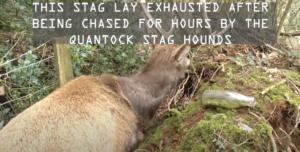
Eventually, the animal is cornered and brought to bay by the hounds. In a last-ditch effort to defend itself, the stag may turn to face his attackers. But all too often, they’re so exhausted, they will simply lie down. North Dorset Hunt Sabs captured heartbreaking footage of a stag in this state, unable to run any further, desperately hiding his face in a hedgerow.
Click here to see North Dorset’s footage.
The Killing
Once the stag is down, one of the hunt’s gunmen will move into position and shoot him. Again, sabs have recently captured footage of this, with the shot being taken with both hounds and sabs in close proximity and real danger. It’s hard to comprehend, but cheers ring out.
The Carve Up
After the stag’s life is taken, so is his dignity. The carve up sees the animal butchered for trophies and meat. Supporters will take teeth and slots (hooves) and organs, while the antlers will be retained for esteemed members of the hunt. To learn more about this ritualistic practice, read our blog post “From Trophy To Tragedy.’
The Lingering Impact
Beyond the immediate suffering and death of the hunted stag, the broader ecological impact of hunts cannot be ignored. The disturbance caused by the hunt disrupts the natural balance of the local ecosystem, potentially driving away other wildlife and causing damage to the delicate flora and fauna of the area.
Commercial shoots are unwilling to let stag hunts through their coverts, which tells you all you need to know about impact to ground nesting birds.
Stag hunts also attract hundreds of vehicles into rural areas, blocking lanes and tearing up hedgerows and verges as they join in with the pursuit and race for a glimpse of the hunted animal or to be first to the kill.
When Will It End?
Stag hunting with hounds is a glaring example of outdated, unnecessary cruelty towards native wildlife. The emotional and physical trauma inflicted on deer is deeply disturbing, and it is our responsibility as a society to question and challenge such practices.
In a world where conservation and ethical treatment of animals are paramount, it is time to abandon this archaic tradition.